Natural Hydrogen dissolved
FDE is no longer searching for hydrogen... it was found!
Such quantities had never been measured before

Where did FDE find hydrogen?
Hydrogen is an unstable molecule in the atmosphere: it does not concentrate in our everyday environment. However, in deep geological environments deprived of oxygen (anaerobic environments), this molecule remains stable. To find significant concentrations of hydrogen, we therefore need to explore the subsoil.
It all started with a scientific discovery in Lorraine (France)...
While exploring the Lorraine subsoil with FDE, two researchers from the CNRS and the University of Lorraine, made an unexpected discovery. As they descended into the subsoil, their measuring instruments (developed by partners in the Regalor consortium, including Solexperts) revealed an increased concentration of natural hydrogen dissolved in the water. Such quantities had never been measured before.
...and a breakthrough with global implications
At a depth of 1,000 meters, analyses revealed a concentration of 20% natural hydrogen dissolved in the water. After sampling this natural hydrogen for several months and conducting numerous analyses on its nature and composition, the researchers hypothesized that at 3,000 meters, this rate could reach 77%. This discovery opens up major energy prospects for the Grand Est region and, more broadly, for France.
Why is there hydrogen in the Lorraine subsoil?
Hydrogen molecules have accumulated in the deep aquifers of the Lorraine Carboniferous period. One hypothesis put forward by researchers is that they originate from a geochemical reaction between water and certain iron-rich minerals. This redox reaction could occur continuously, thus constituting a renewable source of hydrogen. However, its formation requires extreme conditions: a temperature of at least 150°C and high pressure, typically found at a depth of 4,000 meters.
Future research programs will aim to confirm this hypothesis and assess its full potential.
How can hydrogen dissolved in water be captured?
The technology used is based on the same principle as the probe used by our team of scientists to measure gas levels directly in the ground.
A borehole will be drilled to a depth of 4,000 meters to reach the aquifer. Once the well has been drilled, a semi-permeable membrane separates the gas from the water at depth. The difference in pressure between the underground layers and the atmosphere then causes all the gases to rise naturally to the surface. This phenomenon can be compared to opening a bottle of champagne: the gas escapes, while the liquid and the bottle remain.
“We don't touch anything, we don't bring up water, we don't bring up material. So, as things stand, there is no less traumatic way of extracting resources from the subsoil, from the geosphere that lies beneath our feet, than this type of extraction.”
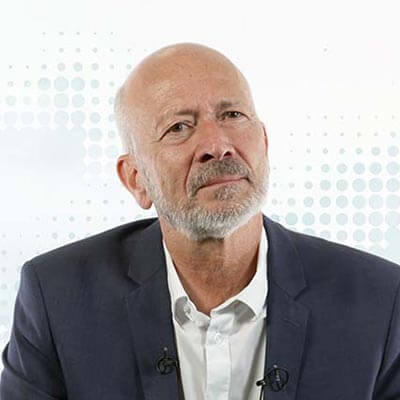
Doctor of Physical Chemistry - GeoRessources Laboratory - University of Lorraine / CNRS
"If we look at the situation in France, the cost of electricity is high. As a result, the cost of electrolytic hydrogen (green H2) is also high. We are looking at prices that often exceed €10/kg. For the moment, it has not found its market. The advantage of natural hydrogen is that it is extremely competitive in terms of cost and has an exceptional carbon footprint. Its price will position it as a direct competitor to gas imported from abroad."
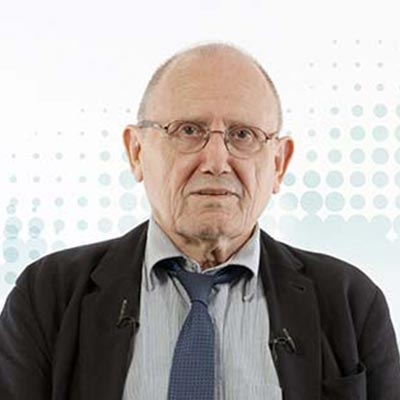
President of Cryo Pur / Head of R&D at FDE
A major opportunity for the region

Due to its exceptional size (16,000 km² x 3 km thick), the Saro-Lorraine carboniferous basin could be home to the world's largest deposit of dissolved natural hydrogen.
This hydrogen is a primary energy source. It therefore does not require any processing that would impact its carbon footprint or cost-effectiveness. Dissolved natural hydrogen therefore has a competitive economic advantage over imported natural gas or oil.
We know that key sectors such as steel, cement, glass, and transportation industries could be the first to use it and find a decisive lever to reach their decarbonization challenges.